Books About Disabilities for People Who Care About Kids & Inclusion


Inclusion isn’t better just because it’s kinder. We should bring disabled perspectives to the center because these perspectives create a world that is more imaginative, more flexible, more sustainable, more dynamic and vibrant for everyone who lives in a body.”

— Rebekah Taussig, author of Sitting Pretty: The View from My Ordinary Resilient Disabled Body

Currently, at least 26% of Americans have a reported disability, while only 3.4% of children’s books have main characters with disabilities (Kingsbury, 2021). To find high-quality, inclusive children’s literature, we’ve got to be intentional. The good news: there are a number of excellent books out there you can share with the young child in your life! I’ve pulled together 20 of them. All are available at Richmond’s own Morrisson-Reeves Public Library. While you know your child’s reading and interest level the best, I’ve added a recommended age range for each book to help guide you and your child to some gems. Book summaries are taken from the library catalog unless otherwise noted. And, hey, if you’ve got some of your own recommendations, please add them to the comment section. I’d love to hear them!

As advocate and writer Margaret Kingsbury notes,

Like all children, disabled kids need to see themselves in books—particularly in stories that move beyond inspiration and trauma narratives…. Equally important is for nondisabled children to read stories of disability outside of ableist stereotypes—to see the beauty in all types of bodies and minds.”

— Margaret Kingsbury from her 2022 article, “Picturing Disability, Centering Joy” in School Library Journal  68 (10).

So let’s do what we can to create a world that is, as Taussig puts it, “more imaginative, more flexible, more sustainable, more dynamic and vibrant for everyone who lives in a body.” I know that’s what I want for the kids in my life!

Happy Reading!

FICTION

Adusei, D. R. (2024). Cesaria feels the beat (First edition). Roaring Brook Press.
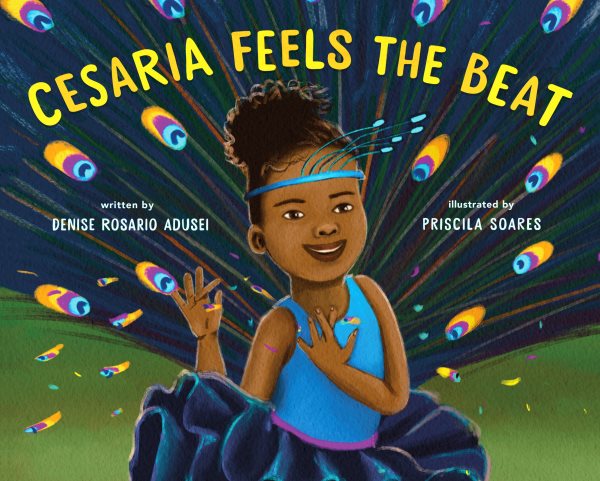
Summary: “A deaf girl stands up for herself and takes off her shoes while dancing at her Carnival performance so she can feel the music through her bare feet.”– Provided by publisher

Preschool, PK, K, Beginning Readers: grades 1-3
 

Asbell, S. (2024). Flap your hands : a celebration of stimming (First edition). Lee & Low Books Inc.
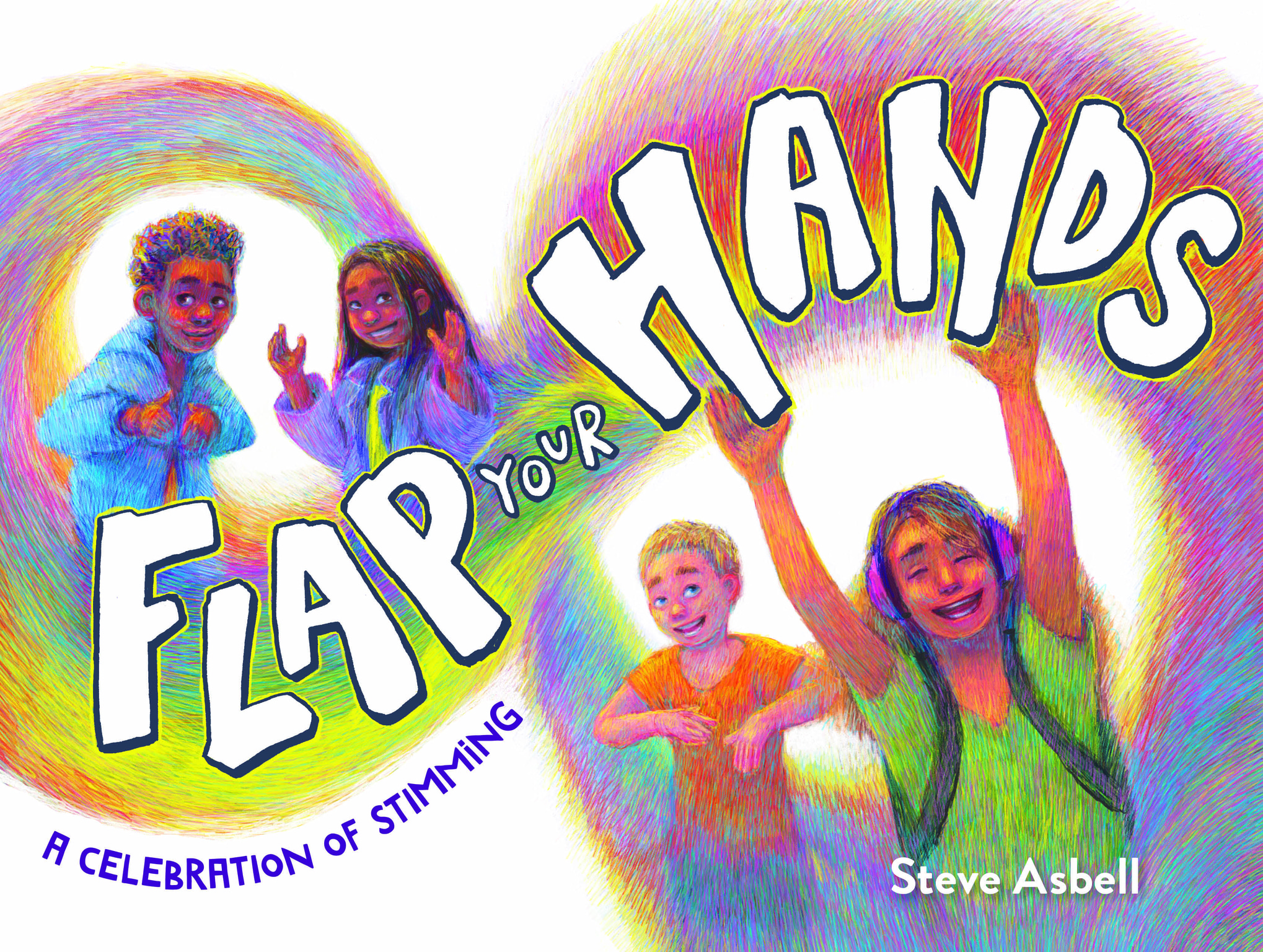
Summary: Four neurodivergent kids, who face stressful moments throughout their day, use body movements, called stims, to self-regulate their emotions.

Preschool, PK, K, Beginning Readers: grades 1-3

Bailey, J. (2023). Henry, like always. Chronicle Books LLC.

Summary: Henry, a first grader on the autism spectrum, attempts to navigate friendships, and sudden changes in classroom routines–like a parade on Friday instead of share time.

Beginning Readers: grades 1-3
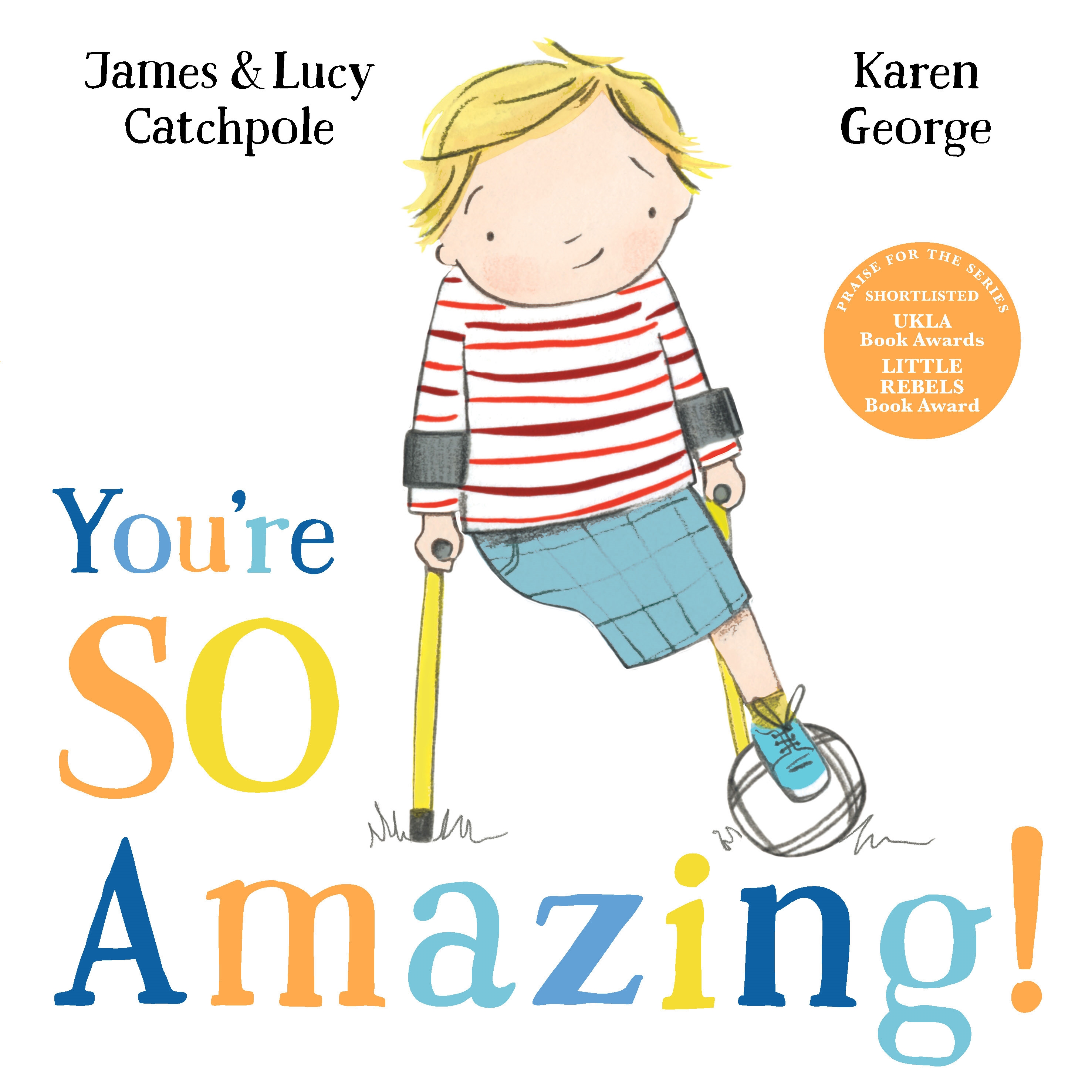


Catchpole, J., & Catchpole, L. (2023). You’re so amazing! (First U.S. edition). Little, Brown and Company.

Summary: When people meet Joe, they often treat him as Amazing Joe or Poor Joe. But can’t he just be . . . Joe? One-legged Joe is ‘amazing’. He knows this because wherever he goes people always tell him he’s amazing. Amazing for sliding down the slide, for kicking a ball . . . even walking to get an ice cream, or even just eating an ice cream. Of course, being Amazing Joe is better than being Poor Joe . . . A groundbreaking picture book which explores how we respond to disability.

Beginning Readers: grades 1-3

Flood, B. (2020). I will dance (First edition). Atheneum Books for Young Readers.
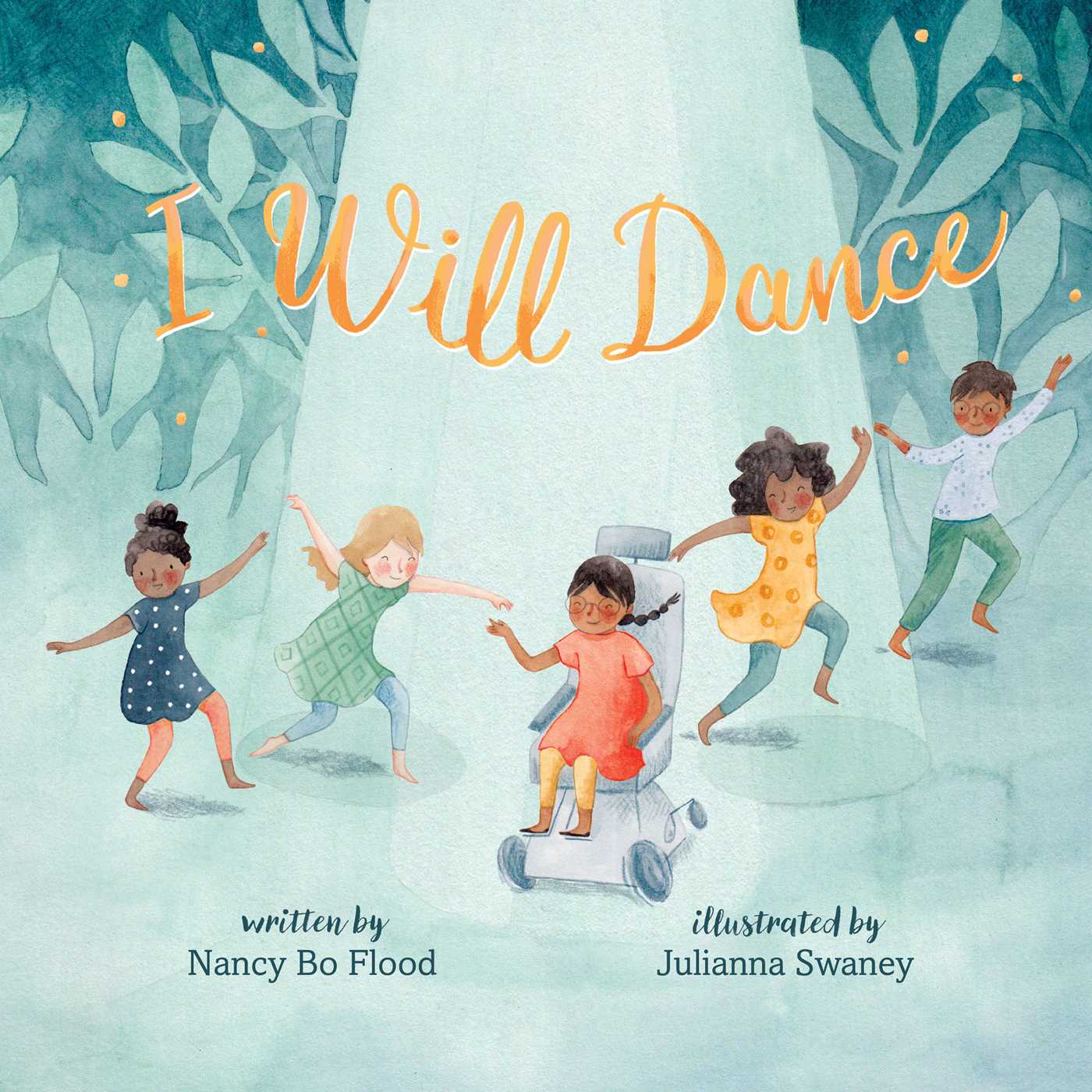
Summary: Eva’s cerebral palsy makes it difficult for her to do many things, but she longs to dance and, finally, her dream is realized. Includes author’s note and information about Young Dance Company, an inclusive dance school and company in St. Paul, Minnesota.

Preschool, PK, K, Beginning Readers: grades 1-3
Hammond, T. (2023). A day with no words (Fourth edition). Wheat Penny Press.
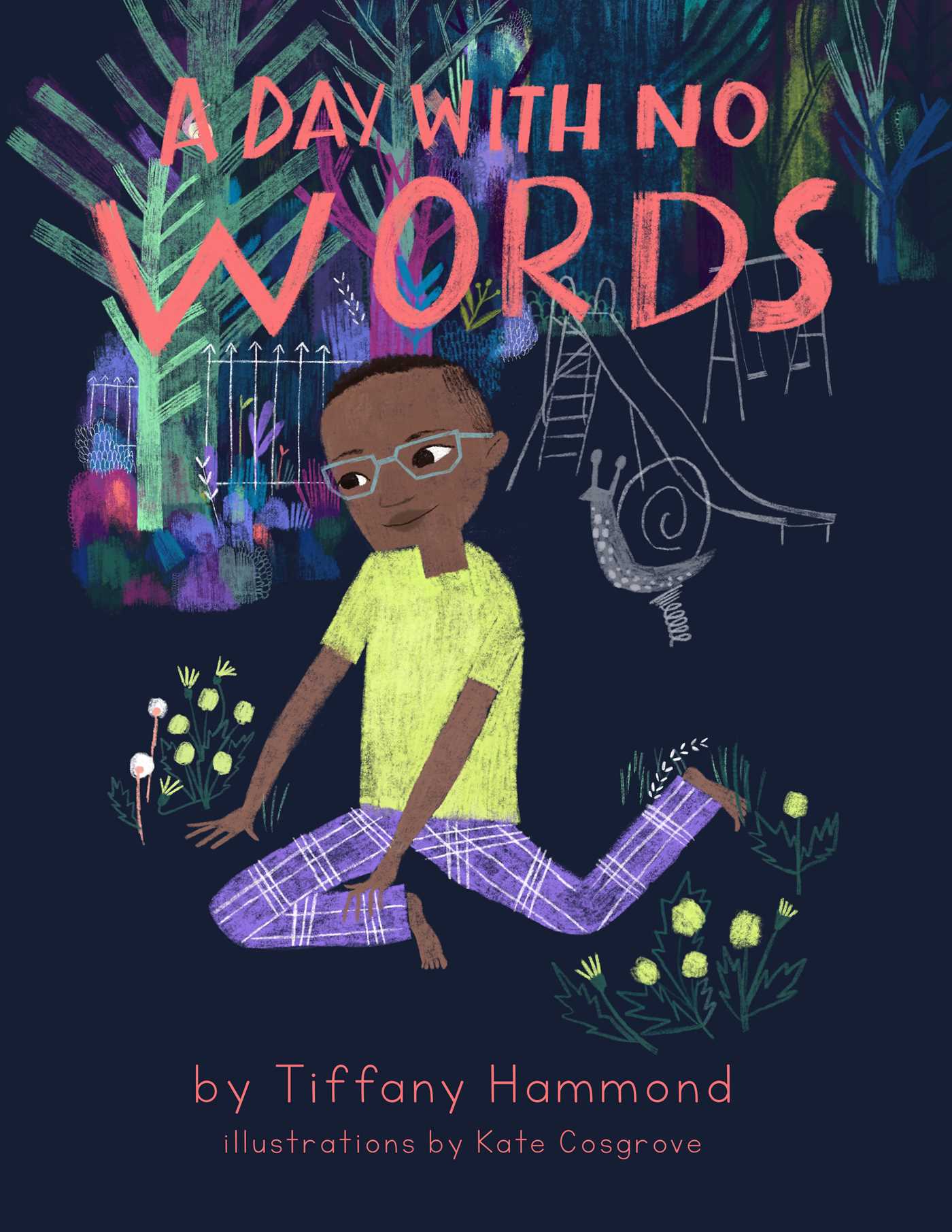
Summary: Young children will learn what life can look like for an autistic child who uses nonverbal communication by following a mother and child on a day where they use a tablet to communicate with others.

Beginning Readers: grades 1-3


Kurpiel, S. (2024). A little like magic. Rocky Pond Books, an imprint of Penguin Random House LLC.

Summary: “Our young narrator doesn’t like itchy hats or cold wind, and she especially doesn’t like going places she’s never been before. But she reluctantly agrees to join her mom at an ice festival, where they watch sculptors chisel and drill until it’s too cold to watch anymore. The next night, they return to see what the artists have created: sparkling, glorious sculptures that feel a little like magic. The ice art will stay with her long after it has melted away. This tender read-aloud is a story of pushing past your comfort zone and finding inspiration in art and natural beauty.” — Provided by publisher.

Preschool, PK, K, Beginning Readers: grades 1-3

 

Lang, G. (2003). Looking out for Sarah (1st pbk. ed). Talewinds.

Summary: Describes a day in the life of a seeing eye dog, from going with his owner to the grocery store and post office, to visiting a class of school children, and playing ball. Also describes their three-hundred mile walk from Boston to New York.

Preschool, PK, K, Beginning Readers: grades 1-3
 

Lebeuf, D. (2021). My city speaks (J. Stokes, Ed.). Kids Can Press.
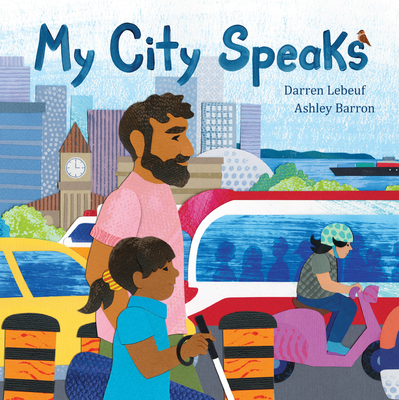
Summary: Author Darren Lebeuf, an award-winning photographer, uses spare text and a rhythmic style to create an evocative read-aloud. The vivid adjectives, both concrete and abstract, will inspire children to try to capture in words what they notice not only in their own town or city, but in any setting. The bright, richly colored cut-paper collage illustrations by Ashley Barron add a captivating visual texture and depth to the story. The portrayal of a girl with a visual impairment walking through the city on her way to her violin recital offers a character education lesson in adaptability”–Provided by publisher

Preschool, PK, K,Beginning Readers: grades 1-3


Lebeuf, D. (2020). My ocean is blue. Kids Can Press.

Summary: “A girl with a disability explores every facet of the ocean during a day at the beach. A girl spends an entire day exploring the seaside with her mom. A keen observer, she sees the ocean as both “big” and “small” and both “sparkly” and “dull. It’s also “dotted and spiraled and wavy and straight.” Her ocean is full of sounds — it “splashes and crashes” and “laughs and hums.” But, at times, it’s silent. She is inspired to examine and celebrate every part of her ocean and doesn’t let anything hold her back. A delightful nature companion sure to awaken the explorer in every child.”– Provided by publisher

Preschool, PK, K, Beginning Readers: grades 1-3


Polacco, P. (2010). Junkyard wonders. Philomel Books.

Summary: Inspired by a teacher who believes each of them is a genius, a class of special-needs students invents something that could convince the whole school they are justifiably proud to be “Junkyard Wonders.”

Beginning Readers: grades 1-3


Rahman, B., Canada Council for the Arts, & Ontario Arts Council. (2021). A sky-blue bench (First edition). Pajama Press Inc.
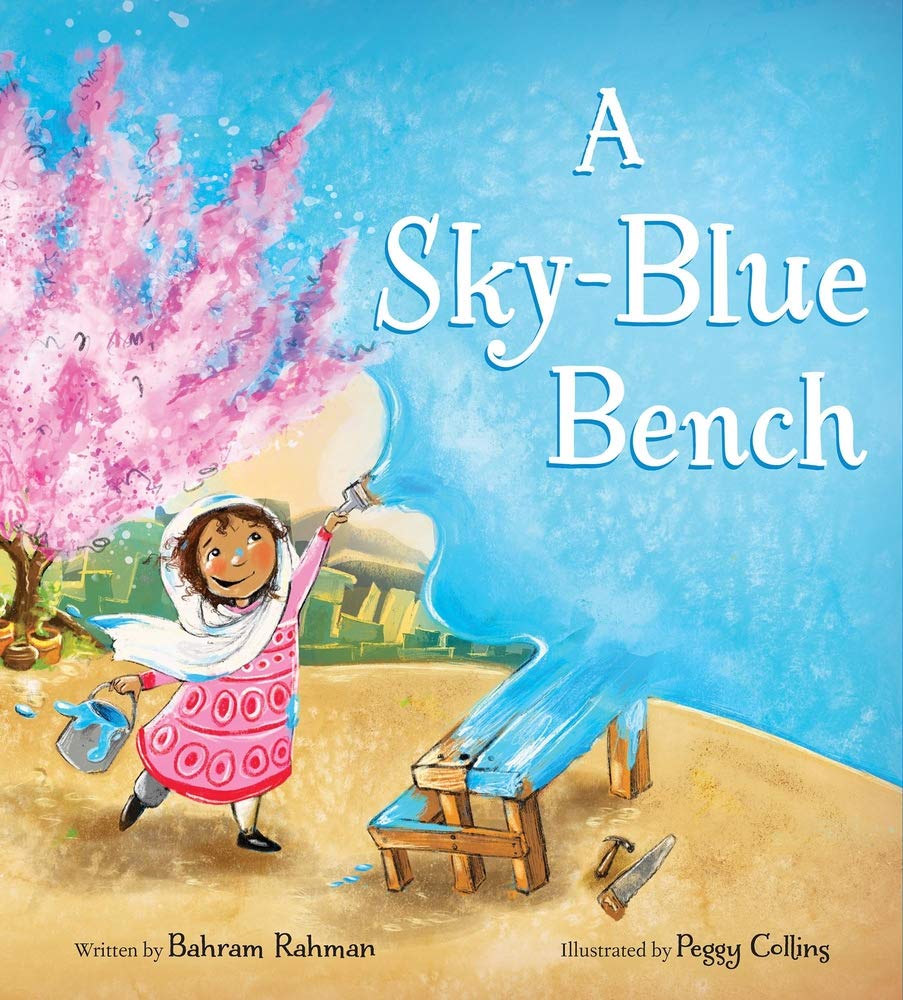
Summary: Young Aria returns to school after recovering from an accident and being fitted with a prosthetic leg, but the school has no furniture and sitting on the floor is too painful. She finds a way to build her own bench, surprising and inspiring her classmates. A sensitive author’s note addresses the author’s experience growing up in Afghanistan during the civil war and the legacy of landmines–Provided by publisher.

Beginning Readers: grades 1-3
 

Sotomayor, S., & Findaway World, LLC. (2021). Just ask! : be different, be brave, be you. Findaway World, LLC.
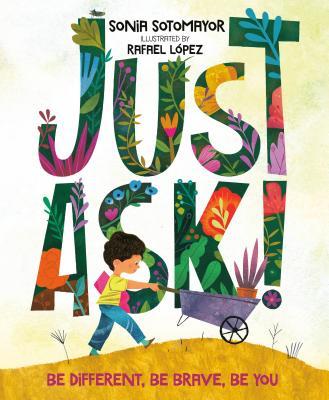
Summary: Sonia and her friends plant a garden, and each one contributes in his or her own special way, in a book that celebrates the many differences among humans. In this warm and inclusive story by U.S. Supreme Justice Sonia Sotomayor, inspired by her own childhood diagnosis of diabetes, readers join along as differently abled kids use their strengths to work together and learn about each other.

Beginning Readers: grades 1-3


Webb, A., & Webb, G. (2024). Emma’s awesome summer camp adventure. Beaming Books.
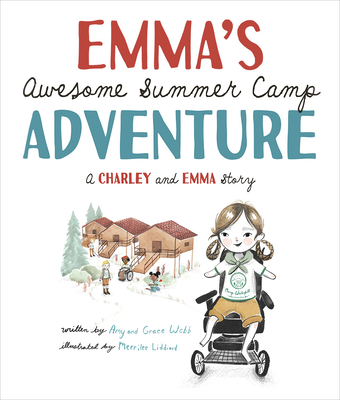
Summary: Emma goes to an accessible summer camp where children cheer along with Emma every step of the way, and learn that a world that’s inclusive and accessible for all is possible.

Beginning Readers: grades 1-3


NONFICTION

Cocca-Leffler, M., & Heumann, J. E. (2022). Fighting for yes! : the story of disability rights activist Judith Heumann. Abrams Books for Young Readers.

Summary: In the 1970s an important disability rights law, Section 504 of the Rehabilitation Act of 1973, was waiting to be signed. Judy [Heumann] and other disability rights activists fought for YES! They held a sit-in until Section 504 was signed into law. Section 504–established thanks in large part to the ongoing work of Judy and her community–laid the foundation for the Americans with Disabilities Act.”– Front jacket flap.

Beginning Readers: grades 1-3
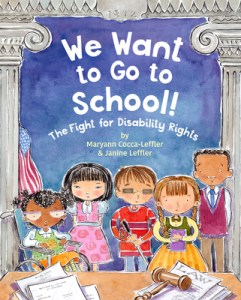
Cocca-Leffler, M., & Leffler, J. (2021). We want to go to school! : the fight for disability rights. Albert Whitman & Company.

Summary: “There was a time in the United States when children with disabilities weren’t allowed to go to public school. But in 1971, seven kids and their families wanted to do something about it. They knew that every child had a right to an equal education, so they went to court to fight for that right. The case Mills v. Board of Education of the District of Columbia led to laws ensuring children with disabilities would receive a free public education. Janine Leffler, one of the millions of kids who attended school as a result of these laws, tells the true story of this landmark case”–Provided by publisher.

Beginning Readers: grades 1-3
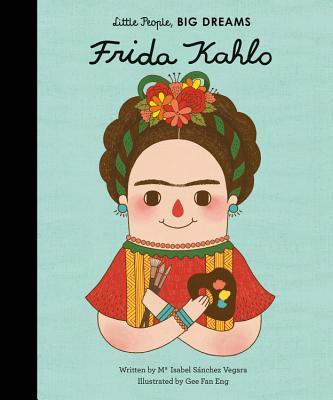
Sánchez Vegara, M. I. (2014). Frida Kahlo (; E. Martinez, Trans.). Frances Lincoln Children’s Books.

Summary: When Frida Kahlo was a teenager, a terrible road accident changed her life forever. Unable to walk, she began painting from her bed. Her self-portraits, which show her pain and grief but also her passion for life and instinct for survival, have made her one of the most famous artists of the twentieth century. This story of her life features a facts and photos section at the back.

Preschool, PK, K, Beginning Readers: grades 1-3


Scott, J., & Spangler, B. (2021). Unbound : the life + art of Judith Scott (First edition). Alfred A. Knopf.

Summary: “An introduction to the life and art of Judith Scott, a renowned artist. Judith Scott was born with Down syndrome. She was deaf, and never learned to speak. She was also a talented artist. Judith was institutionalized until her sister Joyce reunited with her and enrolled her in an art class. Judith went on to become an artist of renown with her work displayed in museums and galleries around the world. Poignantly told by Joyce Scott in collaboration with Brie Spangler and Melissa Sweet and beautifully illustrated by Caldecott Honor artist, Melissa Sweet, Unbound is inspiring and warm, showing us that we can soar beyond our perceived limitations and accomplish something extraordinary”–Provided by publisher.

Beginning Readers: grades 1-3
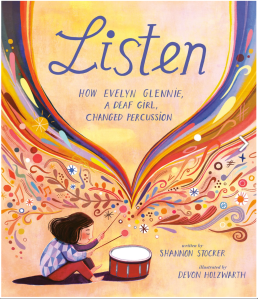
 

Stocker, S. (2022). Listen: how Evelyn Glennie, a deaf girl, changed percussion. Dial Books for Young Readers, an imprint of Penguin Random House, LLC.

Summary: A nonfiction picture book biography celebrating Evelyn Glennie, a deaf woman, who became the first full-time solo percussionist in the world.– Provided by publisher

Preschool, PK, K, Beginning Readers: grades 1-3


But let’s stay on this topic for a minute…

As a teacher and writer, I am always on the lookout for more stories, more ways of knowing. One quote that I’ve found myself going back to again and again comes from Maya Angelou.

Do the best you can until you know better. Then when you know better, do better.” — Maya Angelou

That describes my process as a teacher, a writer…heck, a human being! I am doing the best I can, but I know I’ve got to keep listening and learning. Here are some additional sources that I am finding helpful right now. If you are interested in learning more, too, here are a couple thought-provoking reads:

There are so many great author/illustrator talks out there. Here’s one I love with the inestimable Grace Lin on why children should have books that provide windows into the lives of others as well as mirrors that reflect back their own experiences:

“The Windows and Mirrors of Your Child’s Bookshelf” by Grace Lin

Here are some of trusty places I like to visit when looking for book recommendations and essays on children’s literature. All of them were used in preparing this list.

Bulletin from the Center for Children’s Books from the extraordinary children’s lit experts at the University of Illinois’s iSchool (and where I received my library degree…not that I am biased or anything!)

Horn Book Magazine

School Library Journal

Other great resources for parents and teachers:
The Cooperative Children’s Book Center (CCBC), part of the University of Wisconsin-Madison (UW) School of Education. The CCBC has created bibliographies and booklists of recommended books on a wide range of themes and topics, for example:

  • Lived Disability Experiences: Books for Children and Teens
  • 50 Books about Peace and Social Justice
  • 50 Multicultural Books Every Child Should Know
  • Images of Community: Selected Books for Children and Young Adults
  • 50 Bilingual and Spanish/English Integrated Books
  • Eco-Reading: Selected Books for Children and Teens about Our Earth and the Environment.

We Need Diverse Books is a non-profit and a grassroots organization of children’s book lovers that advocates essential changes in the publishing industry. Their aim is to help produce and promote literature that reflects and honors the lives of all young people.


Awards to watch for…

As you’d except, those mighty book mavens at The American Library Association (ALA) do us all a great service by highlighting stories each year that deserve our attention. You probably know about the Caldecott and Newbery Awards, but did you know that they also give out…(drum roll, please!) the Schneider Family Book Awards that honor an author or illustrator for a book that embodies an artistic expression of the disability experience for child and adolescent audiences. This year’s picture book winner–which I love so much I had to get my own copy–is A Little Like Magic. Here’s a list of past winners.

The Coretta Scott King Book Awards, established in 1970, are given annually to outstanding African American authors and illustrators of books for children and young adults that demonstrate an appreciation of African American culture and universal human values. The award commemorates the life and work of Dr. Martin Luther King, Jr., and honors his wife, Mrs. Coretta Scott King, for her courage and determination to continue the work for peace and world brotherhood.

The Jane Addams Children’s Book Award is awarded to books that effectively promote the cause of peace, social justice, world community, and the equality of the sexes and all races as well as meeting conventional standards for excellence. Founded in 1953, the award is funded by the Peace Education Project, a part of the Jane Addams Peace Association and names two awards each year, one for Older Readers and one for Younger Readers. Honor books can also be named in each category. Includes a thematic, searchable database of award winning books related to social justice themes.

This award, established in 1966 in honor of Mildred L. Batchelder, a former executive director of the Association for Library Service to Children, is a citation awarded to an American publisher for a children’s book considered to be the most outstanding of those books originally published in a foreign language in a foreign country, and subsequently translated into English and published in the United States—as a way to encourage American publishers to seek out superior children’s books abroad and to promote communication among the peoples of the world.

The Caldecott Medal was named in honor of nineteenth-century English illustrator Randolph Caldecott. It is awarded annually by the Association for Library Service to Children, a division of the American Library Association, to the artist of the most distinguished American picture book for children.

The first children’s book award in the world, the Newbery Medal is awarded annually by the American Library Association for the most distinguished American children’s book published the previous year. You may see a list of Newbery Award and Newbery Honor winners from 1921-present here.

The Pura Belpré Award, established in 1996, is presented annually to a Latino/Latina writer and illustrator whose work best portrays, affirms, and celebrates the Latino cultural experience in an outstanding work of literature for children and youth.

 

Remembering Mom: It Had to Be You

This piece originally aired in February 2008 on WMUB-FM (Oxford, Ohio). I have been thinking about it since my mom’s death earlier this month. Her birthday anniversary coincided with Thanksgiving again this year. Listening to this audio essay ten years later, I’m so glad we had this celebration.

It is dedicated to all our imperfect loves.


It Had to Be You

BBK and EBG Feb 2018

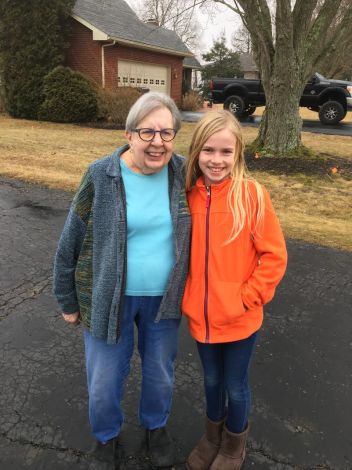
Barbara & her granddaughter Lizzy, Feb. 2018.


My mother celebrated her seventieth birthday this past Thanksgiving and, since I knew it might get lost in all the turkey and pumpkin pie, I decided to throw her a surprise party the week before.

Now I know what they say, surprise parties are acts of aggression. Maybe it’s true: you come home one dark night and before you can flip a switch, an unseen hand does it for you.

“Surprise!”

You are blinded by light. Panic and shock give way to the joy of seeing old friends. They laugh at you (or is it with you?) and then shower you with cake and presents.

When one of my mother’s friends calls to RSVP, she tells me that she hopes our party will not cause my mom to have a second heart attack.

I have my reasons for this act of aggression, kind as it may be. If left to my mom, her birthday party would never happen. “Why should people come all this way for my birthday?” I can imagine her saying. “It’s no big deal.”

But it is a big deal. To mark having come so far. To be with those she cares about. A thought, unsummoned, enters my mind: I don’t want this gathering to wait until her funeral.

In addition to surviving my teenage years, my mother has recently survived a mild heart attack and breast cancer, undergoing surgery (twice), chemotherapy, and radiation. These days, she is doing okay and her cancer in remission. I hope she has many, many more birthdays, but looking at pictures from the past three years I am struck by how quickly she has aged and I think, this is not a time to procrastinate.

So I send out invitations. We’ll meet at the Indianapolis Museum of Art, serenade her, eat an elegant lunch at Puck’s restaurant, and then go on a guided tour. All she knows is that she and I are going to have a little mother-daughter time at the IMA.

When we get to the museum I claim I need to pick up a brochure. We walk down a hallway and then turn the corner.

“Surprise!”

“Oh,” she says. She takes a couple steps back. She calls out people’s names. The force of the surprise, the emotion it unleashes, causes her to cry. I have never seen her so happy.

On cue, the tenor from the barbershop quartet Smilin’ Through blows his pitch pipe, and we all sing “Happy Birthday.”

Strangers stop by to listen to the music. They look at my mom and grin. Then the quartet sings, “It Had To Be You.” And I realize what a perfect song for the imperfect love between two people. Especially the lines:

For nobody else, gave me a thrill 

With all your faults, I love you still

It had to be you, wonderful you

It had to be you.

Wouldn’t it be great if the afterlife were like a surprise party? You turn the corner and there they all are: your friends, your crazy cousin, your first boss, and your kids. Beaming. Here just for you. And then a man you’ve never seen before steps up and blows his pitch pipe. And they all begin to sing…”It Had To Be You.”

My Tennessee Valentine, Part 1: Invitation to the Party

yoda and glasses menagerie

“The Glasses Menagerie” with Yoda

It’s two weeks until The Glass Menagerie opens and there’s a small tribe of us hard at work over at 10th and Main.

Not that I’m complaining. This is a labor of love. Even the family dog has been pressed into service, listening to me run my lines.

For those of us who volunteer at Richmond Civic Theatre, the benefits are pretty darn amazing. It’s a chance to hang out with friends and make new ones. To face the challenge of giving our best to the audience by painting flats, learning new dance steps or memorizing pages of a script. I’m often gobsmacked at the depth of talent folks have in designing lighting, sound and sets, rustling up props, finding just the right costume, bringing words to life, stage managing and directing—often while working or going to school full time. All this in order to share a play with an audience of friends and strangers alike.

But for me, there’s another motivation for being in a show. Well, not just any show. This show.

You see, I am in love with Tennessee Williams. I fell hard for him when I was in high school. My other misfit friends and I saw pieces of ourselves in his tragic characters and dreamed of sharing an apartment in New Orleans. Turned out moving to Bloomington, Indiana was a lot easier! I love his masterful way with words. (You just wait until you hear Tom’s opening monologue or Amanda’s storytelling!) I am in love with the multi-faceted characters he creates, each one harboring a seed of secret longing that aches to burst free from its casing.

Then there’s Tennessee Williams’ courage in showing us the raw emotion of broken dreams and impossible optimism–and trusting the audience to go along for the ride. The world of The Glass Menagerie is not our world and yet the theme of claiming one’s true identity is at the core of the human experience and one I suspect we can all relate to.

For an actor, the members of the Wingfield family and the gentleman caller, Jim O’Connor, are not easy characters to play. And yet, the humanity in which Jim, Laura, Tom and Amanda are depicted give each performer the chance to find the heart of his or her character. The character I play, Amanda Wingfield, is a single mother who wants what is best for her twenty-something-year-old children. She is a woman motivated by love. Love for her children. Love for the past. Even love for her husband, a handsome telephone man who fell in love with long distance and deserted the family 16 years earlier. The way Amanda expresses this desire is, well, let’s just say it’s problematic. Hers is a fierce mother-love that threatens to suffocate the people she holds most dear. She can be exasperating and cruel one minute and innocent and charming the next.

Maybe you know somebody like that? Maybe you even see a little of that sweet complexity in yourself?

Tennessee Williams was no stranger to sweet complexity. In his career and in his personal life, he experienced dramatic highs and lows. The Glass Menagerie, Streetcar Named Desire, Cat on a Hot Tin Roof, and The Night of the Iguana are considered some of the best drama every written. Period. I am a fan, too, of his one-act plays contained in 27 Wagons Full of Cotton, including “Talk to Me Like the Rain and Let Me Listen”—which has one of the longest titles I know of and which I chose as my first directing project. And then there are the infamous lows: his troubled relationship with his family that we see alluded to in The Glass Menagerie, the heartbreak over his sister Rose’s diagnosis of schizophrenia, his financial troubles, the discrimination he experienced during his lifetime because of his identity as a gay man, and his struggles with drug addiction that eventually led to his death in 1983, some twenty years after he wrote his most critically-acclaimed plays.

To say that he wrote as he lived would be to gloss over the pain he experienced and the pain he inadvertently caused others. I don’t believe that artists have to suffer to create good art; they don’t have to be limited to the category of saint or jerk, either. However, when I read his words, I am so moved by his beauty, generosity, honesty and humor whose source is, I know, hard won. He has captured an aspect of the American experience and given it back to us as art that lasts. And so, it’s in this way that Tennessee Williams continues to inspire me—along with countless others—to wrestle with words, to love, and to live in all its messy wonder.

I am so happy to be invited to the party at the Wingfields’ and hope you will join us there, too!

20861652_684229581776065_3775632697702647235_o

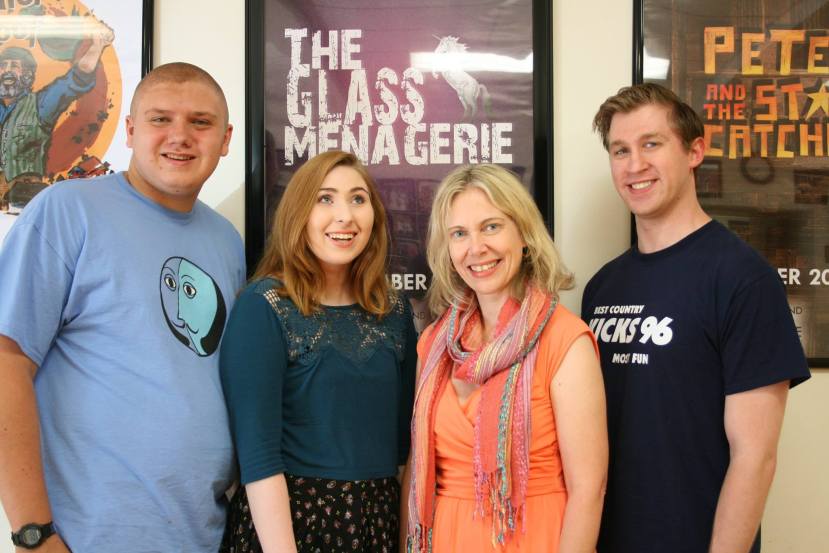
RCT Cast: Jordan Wolfe, Chloe Burton, Jennie Kiffmeyer and Dustin Summan

The Glass Menagerie by Tennessee Williams
September 15-16 & 22-23 at 7:30pm, Sept. 24 at 2:00pm
By special arrangement with Dramatists Play Service, Inc.
Directed by David Cobine
1003 East Main Street
Richmond, IN 47374
Tickets are $18. Box office: (765) 962-1816 or online

My Tennessee Valentine, Part 2: Three Inspirations for Finding Amanda Wingfield

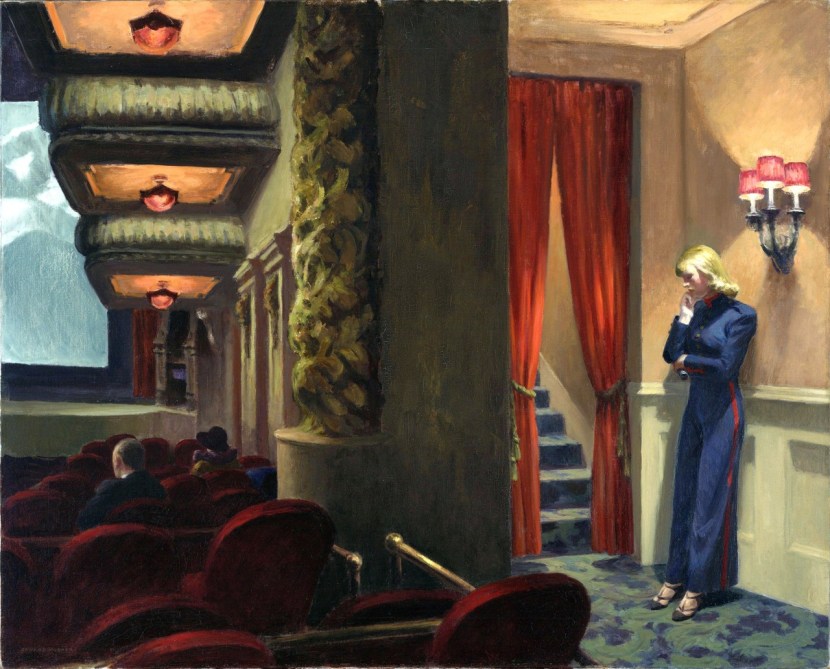
HOPPER_1939_New_York_Movie

New York Movie. 1939. Oil on canvas.
by Edward Hopper
The Museum of Modern Art, New York, NY, U.S.A.


One of the fun things about exploring the world of the play is finding inspiration to bring it to life. Chloe Burton, Dustin Summan, Jordan Wolfe, David Cobine, Patty Glen and I have shared our impressions of other productions, biographical details from Tennessee Williams’ life, acting challenges and favorite lines. There are some good biographies out there on Williams for those so inclined. And then, of course, there is the play itself which rewards the reader over and over again.

Here are other three things I’ve taken inspiration from in preparing to play Amanda:

When I think of the world of The Glass Menagerie, I think of Edward Hopper’s paintings from the 1920s and 1930s. In one, we get a woman sitting up in bed alone bathed in the uncompromising light of morning. In another, famous image, a couple sitting at the counter at an all-night diner, a way station for lost souls. Reflecting Tom’s hunger for escape at the movies, Hopper even gave us a few scenes from 1930s movie houses where fantasy and reality collide. I’ve picked one here that could be similar to the kind of stumbled upon poetry that Tom escaped into every night.


When working on a show, I usually find a song that helps me connect with my character. Music that tends to be private, idiosyncratic, and good for blasting in the car on the way home from rehearsal or listening to as part of my pre-show ritual. This time around, it is Kate Bush’s “This Woman’s Work” a song from her 1989 album, The Sensual World, that gives me the chills. I can imagine the words coming straight from Amanda along with a howl as she pleads for just “one moment more” with those she loves in the hope that maybe this time she can do the right thing. Just because it’s futile doesn’t make it any less real.


Finally, I turn to contemporary poet, Mary Oliver, another writer who has written so eloquently about that life-defining moment of when one must choose to stay or go.

The Journey

by Mary Oliver


One day you finally knew

what you had to do, and began,

though the voices around you

kept shouting

their bad advice—

though the whole house

began to tremble

and you felt the old tug

at your ankles.

“Mend my life!”

each voice cried.

But you didn’t stop.

You knew what you had to do,

though the wind pried

with its stiff fingers

at the very foundations,

though their melancholy

was terrible.

It was already late

enough, and a wild night,

and the road full of fallen

branches and stones.

But little by little,

as you left their voices behind,

the stars began to burn

through the sheets of clouds,

and there was a new voice

which you slowly

recognized as your own,

that kept you company

as you strode deeper and deeper

into the world,

determined to do

the only thing you could do—

determined to save

the only life you could save.

room-in-new-york

Room in New York. 1932. Oil on canvas
by Edward Hopper
Sheldon Museum of Art


The Glass Menagerie by Tennessee Williams
September 15-16 & 22-23 at 7:30pm, Sept. 24 at 2:00pm
By special arrangement with Dramatists Play Service, Inc.
Directed by David Cobine
1003 East Main Street
Richmond, IN 47374
Tickets are $18. Box office: (765) 962-1816 or online

What Coaxes: Protests and Poetry

The poet Muriel Rukeyser once wrote:

 I will protest all my life . . . but I’m a person who makes … and I have decided that whenever I protest . . . I will make something — I will make poems, plant, feed children, build, but not ever protest without making something.”

Muriel Rukeyser’s words really resonate with me these days. The urge to protest racism, bigotry and hatred feels so urgent to me. And yet, my artist self doesn’t want to be left out. I figure it’s time to make something: a peach crisp that we take to a potluck. A remounting of Tennessee Williams’ masterpiece, The Glass Menagerie, at Richmond Civic Theatre with a lovely group of people. (More about that later). A handful of words that tell a story.

There’s tension, of course, between grappling with life-and-death problems and creating something tender and beautiful. It can be hard to justify making art when people’s basic needs aren’t being met. But I think protest and poetry alike can be about making space for compassion and humility, calling people out–and calling people in.

Both require moxie to believe in the possibility of hope.

Now, sometimes the art is clumsy and fails to connect to its audience. Sometimes it has a life-span of a mayfly. But it’s through the act of creating that we can imagine a different, better world. One that we occasionally can even dream into reality.

Here is a new poem I’ve been working on this summer. It’s my own way of grappling with what can coax us to open up to ideas or people or places that challenge us. I’d like to share it with you.

What Coaxes

A closed fist can neither
give or accept the gift. Can’t

clasp another hand
to hoist the body out of

its history. Won’t find the way
to a mother’s arm at midnight

as her son bleeds out for want
of holding. Or wave as

my car passes your truck.
And certainly not stroke

the smooth head of a yellow dog
who searches out violets after rain.

This is what Agnes told me
before describing her work with

prisoners in St. Louis
performing Shakespeare.

What entices small petals to
open April mornings or swing

the car door ajar to receive
passengers? This remains a mystery

to the mother who opens
her eyes without seeing,

words in blank verse neatly tied
into two hard knots that lay

in the lap. Fists the same size
as our beating iambic hearts.

What coaxes empty hands
petal by petal, tears and doors?

What act of surprising ourselves with hope
will finally hold?

                                               —Jennie Kiffmeyer

Maybe you feel like making something, too, in the spirit of Muriel Rukeyser? If so, please consider telling us about it here in the comments section. I’d love to read it.

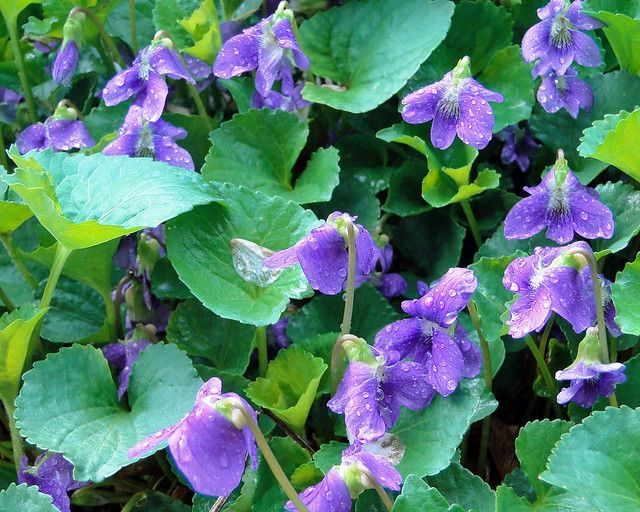
Picture: “Violets in the Rain” by Maia C. (https://flic.kr/p/nCk2Dz)


Lift Every Voice and Sing

LEVAS 7

Re-posted from a Feb. 2016 chapel talk at Oregon Episcopal School.


Today we’re going to hear a story…

about the power of a song to be a Power for Good.

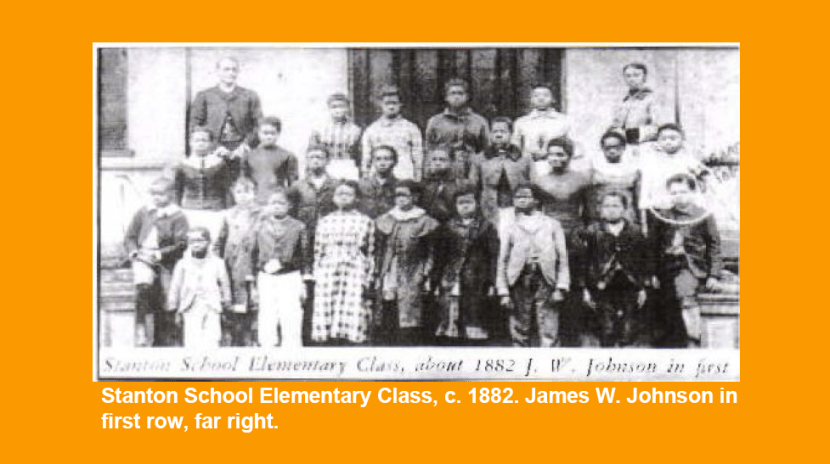
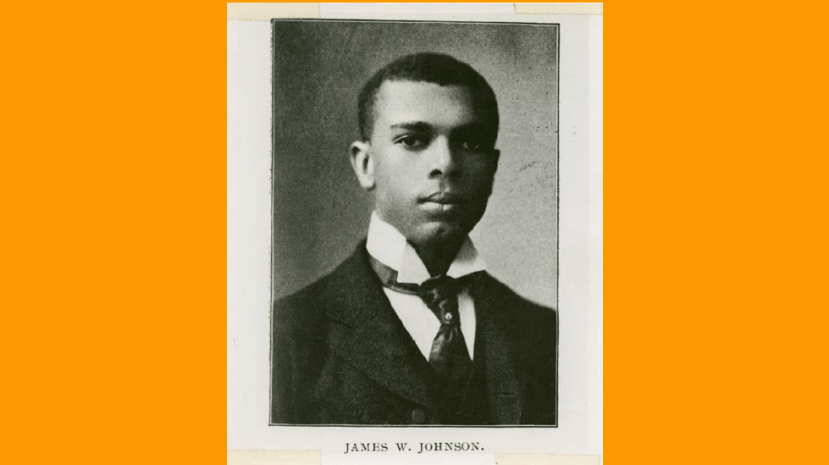
The teachers at Stanton Central Grammar School were planning an assembly in honor of Abraham Lincoln’s birthday. Would the principal, James Weldon Johnson, give a speech, the teachers wondered.


Screen Shot 2016-03-02 at 3.24.30 PM

The year was 1900. 35 years after the end of Civil War. 35 years after the adoption of the 13th Amendment to the Constitution ending slavery.

The place was Jacksonville, Florida where memories of slavery were still fresh in the lives of the men and women who lived there. Some of the people who lived in Jacksonville had been slaves themselves and some had been slave owners. Some had fought in the war against the Union soldiers, while others had prayed for justice and freedom for all African and African American people.

LEVAS 2

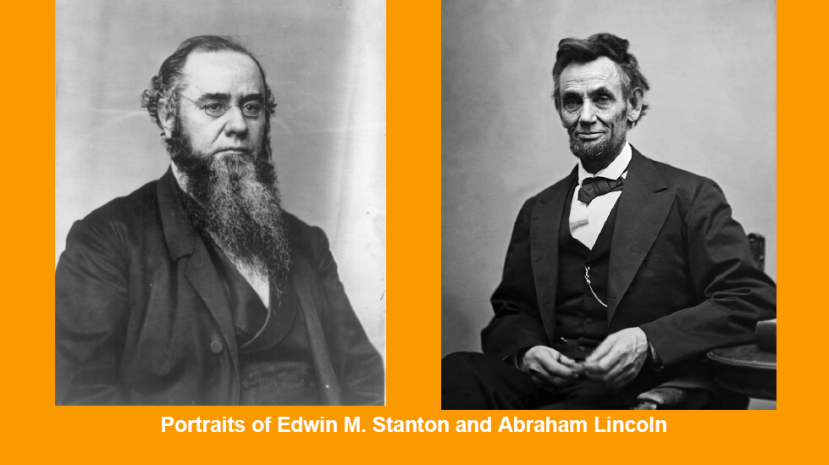
Stanton Central Grammar School had been named for Edwin M. Stanton, an abolitionist, someone who fought for the end of slavery, and Secretary of War under President Abraham Lincoln. Some of the children and grandchildren of former slaves attended that school.

LEVAS 3

At the turn of the century, Jacksonville was a bustling place and was considered to be the most progressive city in the Deep South.

LEVAS 4

Mr. James Weldon Johnson, the principal at Stanton Central Grammar School, had been born in Jacksonville. He had even attended that same school and his mother had been the first African American public school teacher in Florida there. Not willing to stop his education after he graduated from Stanton in the 8th grade, James traveled to Atlanta, Georgia where he attended high school and then college.

LEVAS 5

After graduating from college, James returned to Jacksonville and became a teacher at Stanton. A little later, he became the principal.

Like Abraham Lincoln before him, James Weldon Johnson loved justice and decided to become a lawyer. While still working as a teacher, he studied law and became the first African American lawyer in Florida after the Civil War. Like Abraham Lincoln, he believed in listening to people whose opinions were different from his own and trying to find common ground. Like Abraham Lincoln, he believed in hard work and hope. He believed in the power of good to change lives.

Abraham Lincoln had done much to point the country in the right direction, but, as James Weldon Johnson and other millions of African Americans knew, there was much work to be done before America could begin to live into its promise to be a land where all people were created equal and had equal chance to bloom. In 1900 there was still no public high school for African American students. Prejudice fueled Jim Crow laws that kept white and black people separate and not equal.  But still, James Weldon Johnson had hope for a better America and a better future.

Teacher, principal, lawyer, and poet, James Weldon Johnson was a busy man.  Would he have time to make a speech? The teachers wondered. James replied that he’d be happy to—and what’s more, he and his brother had written a song they would like the children to sing. It was called “Lift Every Voice and Sing.” James had written the words originally as a poem. His brother John Rosamond who had studied music at the famous New England Conservatory of Music composed the melody.

LEVAS 6

Though the brothers admitted later that they essentially forgot about the song after the assembly, others didn’t. It spread to nearby schools and churches throughout the South. And by 1920, LEVAS was adopted as the anthem of the National Association for the Advancement of Colored People (or NAACP) when James himself was the chief executive officer of the group. Over the past 116 years it has been sung at countless civil rights marches, rallies and in churches and is thought to have inspired Martin Luther King, Jr. when composing his “I Have a Dream” speech. It is included in the Episcopal Church’s blue hymnal and in many other song books in Christian churches.

Let’s take a look at James Weldon Johnson’s words as illustrated by Bryan Collier.


Later Johnson moved permanently to New York. He continued to work for justice through his teaching and writing. A member of the Harlem Renaissance and friend to such writers like Langston Hughes and Zora Neale Hurtson, Johnson wrote fiction, memoir, lyrics, and poetry. In one poem that he wrote nearly 20 years after “Lift Every Voice and Sing,”  James spoke directly to the American dream. It’s called “To America.”

Now, what’s really cool is that we can even hear James Weldon Johnson reading the poem. This recording was made on Christmas Eve, 1934, when he was 63 years old.

LEVAS 14

Recording: Made on December 24, 1935 at Columbia University, recorded by Barnard professors George W. Hibbitt and W. Cabell Greet, lexicologists and scholars of American dialects.

Throughout his life, James Weldon Johnson kept celebrating African American culture and battling racism. But he was also careful to not let racism’s bitter destructiveness destroy his spirit. Around the time he recorded the reading of his poem, “To America,” he wrote out this pledge for himself:

I will not allow one prejudiced person or one million or one hundred million to blight my life. I will not let prejudice or any of its attendant humiliations and injustices bear me down to spiritual defeat. My inner life is mine, and I shall defend and maintain its integrity against all the powers of hell.

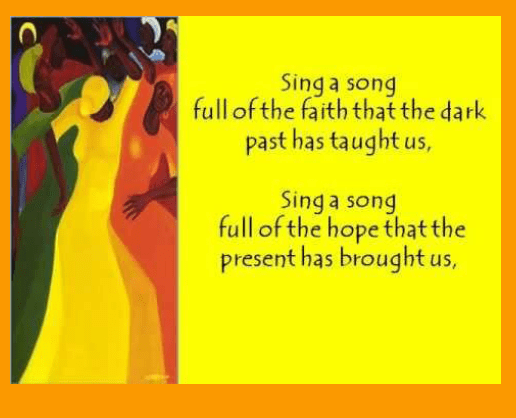
In “Lift Every Voice and Sing,” we hear the words:

Sing a song full of the faith that the dark past has taught us,

Sing a song full of the hope that the present has brought us.

Today we are still singing a song full of faith. Its melody comes to us from the past. From James Weldon Johnson and his brother John Rosamond Johnson. From the millions of people who have since sung this song and dreamed of peace and justice, who have had faith in equality and love. We sing a song of hope and listen for its echo in our lives and in our country.

During our moment of quiet reflection, I would like you to think about how you can lift your voice and sing?

Please join me now in singing “Lift Every Voice and Sing.”

LEVAS 17

Bibliography:
Johnson, James W. Lift Every Voice and Sing: A Pictorial Tribute to the Negro National Anthem. New York: Jump at the Sun/Hyperion Books for Children, 2000. Print.
(Historic black-and-white photographs accompany this version of the song.)
Johnson, James W, and Elizabeth Catlett. Lift Every Voice and Sing. New York: Walker, 1993. Print.
Johnson, James W, and Bryan Collier. Lift Every Voice and Sing. New York, NY: Amistad, 2007. Print.
Johnson, James W, and Jan S. Gilchrist. Lift Ev’ry Voice and Sing. New York: Scholastic, 2002. Print.


Out of the Ashes: Ash Wednesday 2016


This past week I led my first Ash Wednesday chapel at Oregon Episcopal School for approximately 300 elementary school-age kids, their teachers, and a handful of parents and other OES employees. It was a fairly joyful gathering as Ash Wednesday services go–there was much singing and laughter along with hundreds of brightly-colored alleluia sheets being stuffed into a basket that was then hoisted to the ceiling of the chapel by a beloved 1st grade teacher where the basket will stay until Easter. Even the ashes were an object of happy curiosity. Completely voluntary, most children chose to receive the ashes or a blessing. But first they wanted to see the ashes in the dish. They wanted to know what it would feel like for me to gently trace the sign of the cross on their foreheads with the ash, (“it’s like a butterfly wing brushing again your skin.”) After deciding to go ahead, one by one, I watched as these rambunctious and charming kiddoes grew suddenly quiet and watchful. They bowed their heads, many closed their eyes, and they took part in a ritual that goes back centuries. And, then, just as suddenly, they popped up and excitedly turned to their friends: “Can you see it? I can see yours!”

As chaplain, I loved seeing their openness and their curiosity to experiencing God in the moment. Likewise, it was a powerful thing to be reminded of all the tender ways all of us are part of this holy cycle of life.

Here are my remarks from the day’s gathering. The words of the closing blessing are also for you, Dear Reader. May this Lenten season be just what you need it to be.

Chapel Talk, 2/10/16

Many faith traditions set aside time for kids and grown-ups to wonder about life. To hit the pause button and ask: what’s keeping me from experiencing and loving God right now? What should I change?

In the Christian Church, this time for reflection and wondering is called the Season of Lent, and it begins today and lasts for 40 days until Easter.

One of the things we do in Chapel on Ash Wednesday is we put away our alleluias and we’re invited to come forward to receive a mark of ash on our foreheads in the sign of the cross.

The ashes are a reminder that sometimes in life we experience loss. We feel sad. Lonely. We hurt or are angry. During those times, it can hard to say happy, joyful words like alleluia. It can be hard to say any words at all.

During Lent, we put away our alleluias as a way of remembering the tough times. Christians remember stories about Jesus and the ways he didn’t forget people who were sad, lonely, hurting or angry. He walked with them and ate with them and prayed with them. He made sure that they knew they were loved by God and that they were not alone. He even experienced death so that he could feel people’s deepest pain and offer everyone healing and wholeness.

The ashes also remind us that each of us is part of the cycle of life. In the story of the “Garden of Eden” we heard last week, God tells Adam and Eve: “You are dust and to dust you shall return.” We will hear these words again today and each Ash Wednesday as we re-enter that moment in the story.

There are sad parts in the story of life–but they are never the whole story and they are never the end of the story.

We are dust and to dust we shall return. But it is in the returning that we are welcomed home by a loving and forgiving God.

Easter will come and when it does, the basket brimming full of alleluias will be emptied. The words–praise to you, Lord–will be given back to us.

The past couple weeks, 5th graders have started exploring what it means to be awake and aware of the world around us. We’ve talked about the Greek philosopher Plato’s “Myth of the Cave” in which we hear an imaginary tale about a group of people who experience life only as shadows projected on a cave wall and hear strange sounds. They have chosen to stay in a distorted world and cannot live life fully. The students and I imagined what our own caves might look like–and talked about the things that keep us from experiencing reality.

We’ve also started exploring what religions such as Christianity, Hinduism, Buddhism and Islam have said about the importance of being awake to the reality around us. How another name for this Reality can be God.

Christians are not the only ones who believe that ashes are holy. Hindus and Sikhs, too, have special ceremonies that honor the dead and return their ashes to sacred waters. Some Native peoples have had sacred rituals for releasing the spirits of the dead through care of the body’s ashes. Though different from the Christian observance of Ash Wednesday and Lent, ashes have been a way for many people to affirm our place as human beings in the cycle of life.

When asked, our 5th graders had their own associations with ashes. Campfires and roasting marshmallows, fire, charcoal, volcanoes erupting, a phoenix rising from the ashes, and death.

Our 5th graders and some of our 4th graders have explored these ideas in art. You can see examples of their work in charcoal and colored pencil on paper during the the imposition of the ashes. You will also see images by other artists who have been inspired by these same stories. Artists who have asked some of the same questions: What is keeping me from experiencing God? What choices have I made that have caused others to feel pain, loneliness, anger and sadness? How are life and death connected? What will rise out of the ashes of my understanding?

Chaplain Jenny, Chaplain Craig, Mother Heather and I invite you now to come up, aisle by aisle, to receive these holy ashes or you may simply ask for a blessing. You are also welcome to stay right where you are, settle into stillness. Let the images wash over you. Be aware of what thoughts and feelings they stir wake inside of you.

Closing Blessing:

A Blessing for Ash Wednesday

As we enter into the Season of Lent,

Remember that you are earth–rich loamy soil

just right for new seeds to sprout.

You are ash—the remnant of a crackling fire of

Love and Forgiveness that burns bright for all to see.

You are dust—released from the Big Bang billions of

years ago that eventually became the building blocks of all life.

And finally you are hope—for out of the dust comes new life.

In you, the story continues to unfold.

The Holy One is waiting for you.

What’s stopping you from joining Her?

Ash Wednesday 1.jpg

Trees of Mercy

Tia's treeOne of the things I love about stories is that they can help us explore liminal moments in our lives from the relative safety of a seat on the bus or while propped up in bed. Quest narratives allow us to cross over from adolescence to adulthood without actually getting singed from a dragon’s fiery breath. (Though memories of the middle school cafeteria may give a dragon a run for his money!) Stories that transport us across seven seas in seven ships can give us courage while we make our own journeys to a new home, heal a broken relationship, or enter a new phase of life. Myths, fairy tales and other stories of the “folk” can shine a light on the path we choose to follow–even when it’s a path that leads from one life to the next.

Here is one such story about a woman named Tía Miseria who thumbs her nose at death and, by doing so, brings something unexpected into the world. It is a story about a feisty, unconventional woman that I love to tell! My version here is based closely on the ones told by Harlynne Geisler and Olga Loya.

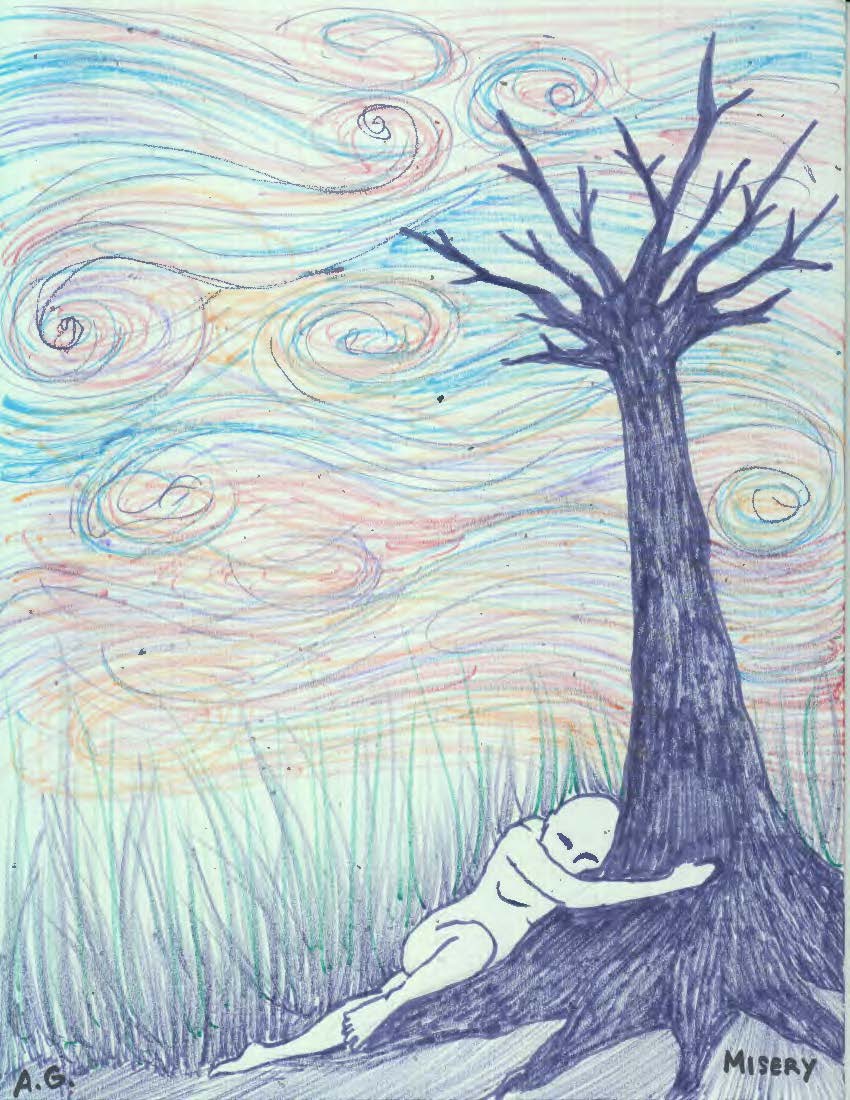
Once, when I told “Tía Miseria” to an audience of students at Earlham School of Religion and Bethany Theological Seminary, one seminarian named Andrew drew a picture while I told the story. Later he shared it with me. Rendered in colored pencil, a lone, naked figure embraces a bare tree whose branches extend into a sky of swirling rainbow colors. One word is written in between the tree’s roots: misery.

“Miseria” can be translated as “misery,” but I like to think that it is also closely related to “misericor’dia,” or “mercy.” In Andrew’s stunning picture, just as in the folktale itself, we are not given answers. Instead, we are asked to think about the nature of misery, the place of mercy, and the relationship that can spring up between the two. The story itself becomes a tree of mercy, offering shelter while we try to puzzle out lives that may feel like equal parts of bizarre comedy and mundane tragedy. I like to think Tía Miseria is sitting under the tree with us, too, ready to hand over the perfectly ripe pear.

That is, as long as we ask politely.

Happy Listening!

*If you are having trouble with the media player, you may also listen to it here.